
Why I Chose GitHub Sync Over MCP Servers and APIs
I built all three. Here's why I killed two of them.

When I started building Black Ice’s integration layer, I had three parallel systems on the table: a dedicated REST API, an MCP (Model Context Protocol) server, and GitHub Sync. I shipped all three in early prototypes. Then I stepped back and asked a simple question: do my users actually need three different ways to access the same data?
The answer was no.

The simplicity principl
e
Every additional system we maintain is a system that can break. An API means authentication tokens, rate limiting, versioning, documentation, SDK maintenance, and on-call support for uptime. An MCP server adds another protocol layer, another deployment target, another surface area for security vulnerabilities. Each one demands its own monitoring, its own error handling, its own upgrade path.
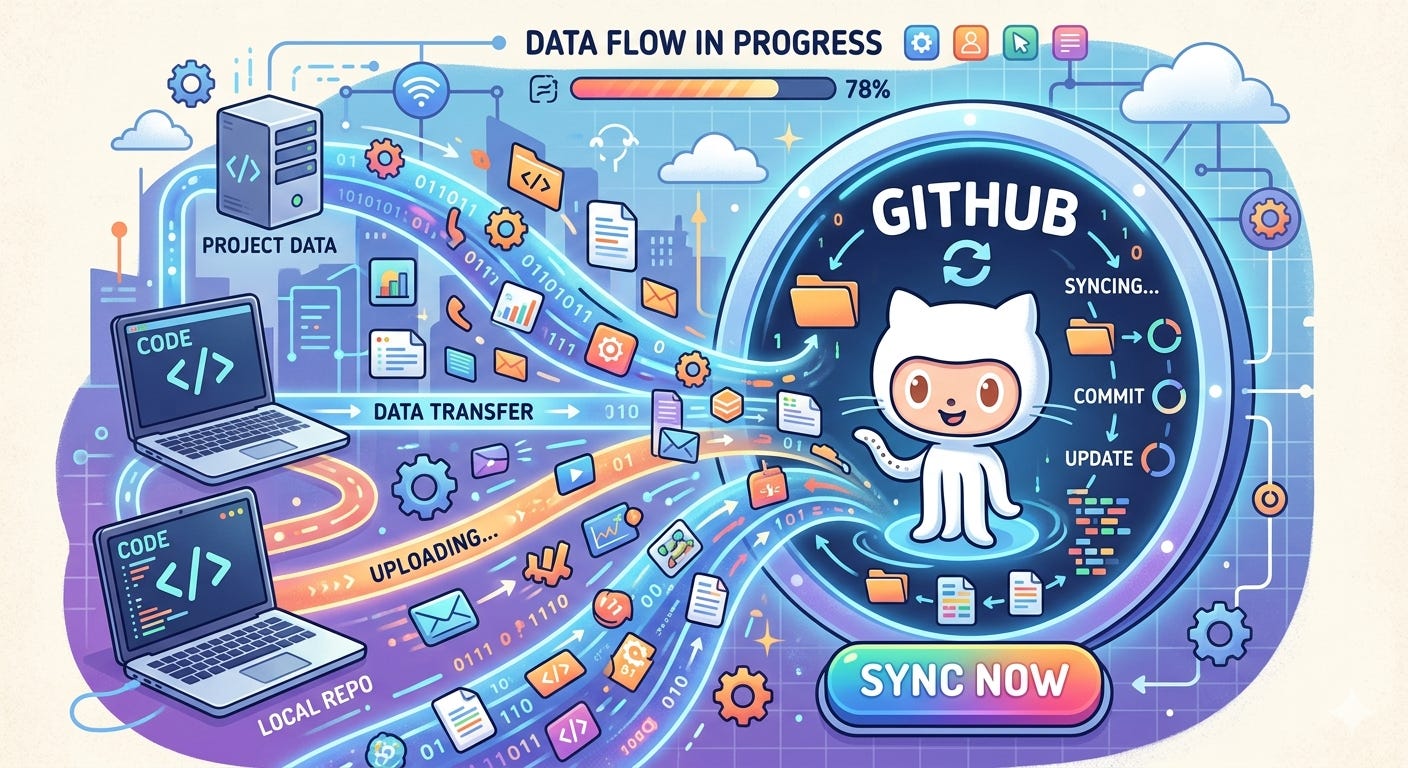
GitHub Sync does one thing: it pushes your terminology ontology as structured Markdown files in organized folders to a repository you control. That’s it. One mechanism, one direction, one mental model.
Why GitHub is enough
Here’s what you get for free when your data lives in a GitHub repository:
AI agent access. Claude Code, Cursor, Copilot, Windsurf, Devin — every major AI coding agent already knows how to read GitHub repositories. No custom API integration required. Your AI agent bundle is just there, in the repo, ready to be referenced as context.
Version history. Every sync creates a commit. You get a full audit trail of how your terminology evolved over time, with diffs, without us building any of that.
CI/CD pipelines. Want to validate terminology changes? Trigger a GitHub Action. Want to deploy updated glossaries to your production systems? Write a workflow. The ecosystem already exists.
Access control. GitHub’s permission model is battle-tested. Private repos, team access, branch protection — all handled by infrastructure that billions of dollars have been spent hardening.
Webhooks and automation. GitHub’s own webhook system lets you react to pushes, build notification pipelines, or trigger downstream processes. We don’t need to build our own webhook dispatcher for sync events.
What we gained by removing the API and MCP server
Reduced attack surface. No API tokens to leak. No MCP endpoints to secure. The GitHub PAT is scoped to a single repository with contents: write — minimal blast radius.
Zero infrastructure to scale. We don’t need to provision API servers, manage connection pools, or worry about rate limiting under load. GitHub’s infrastructure handles the heavy lifting.
Simpler onboarding. Instead of reading API documentation, generating keys, and integrating SDKs, users configure a repository and click “Sync Now.” The learning curve dropped from hours to minutes.
Maintenance cost near zero. One edge function. One database table for config. No API versioning strategy, no deprecation cycles, no breaking changes to communicate.
Better reliability. Fewer moving parts means fewer failure modes. Our sync is atomic — it either pushes all files successfully or rolls back. There’s no partial state, no eventual consistency to reason about.
The principle at work
There’s a tendency in software to equate capability with complexity. More endpoints, more protocols, more options — surely that’s better? But every abstraction layer we add is a layer our users have to understand and a layer we have to maintain.
The best infrastructure is the infrastructure you don’t have to build. GitHub already solved file storage, versioning, access control, and API access. AI agents already speak GitHub fluently. By choosing GitHub Sync as our single integration path, we’re not removing capability, we’re removing friction.
Your terminology ontology ends up in the same place it would have via an API call or an MCP tool invocation: in a structured format that machines can read. The difference is that it gets there through a system that every developer and every AI agent already knows how to use.
Simple scales. Simple ships. Simple sleeps through the night.
What this trade-off actually costs
GitHub Sync is the right call for most users. It’s not the right call for all of them.
If your procurement process requires a documented REST API for vendor security review, GitHub PAT access won’t clear that checklist, regardless of how elegant the reasoning is. That’s not a technical problem; it’s an organisational one. We’re not building for that buyer right now. That’s a conscious choice, and it keeps us focused on the users who move fast and ship things.
There’s also a failure mode worth naming honestly. An expired PAT, an accidentally archived repo, a silent permission change at the org level. These don’t throw loud errors. The mitigation is straightforward — sync status monitoring, PAT expiry alerts — and because there’s only one integration path, there’s only one place to look when something’s off. That’s a feature, not a consolation prize.
Finally, GitHub Sync is write-only by design. Black Ice pushes to your repository. Your repository is the output layer, not the source of truth, which means your ontology stays authoritative, and the direction of data flow is always clear.
One direction. One mechanism. One thing that can go wrong at a time, and you’ll know exactly where to find it.
Thank you for this! I’m resonating with short practicle experince pieces like this that show case strategic systems thinking coupled with architecture and user experience.